The Decent Homes Standard Explained: What Housing Providers Need to Know
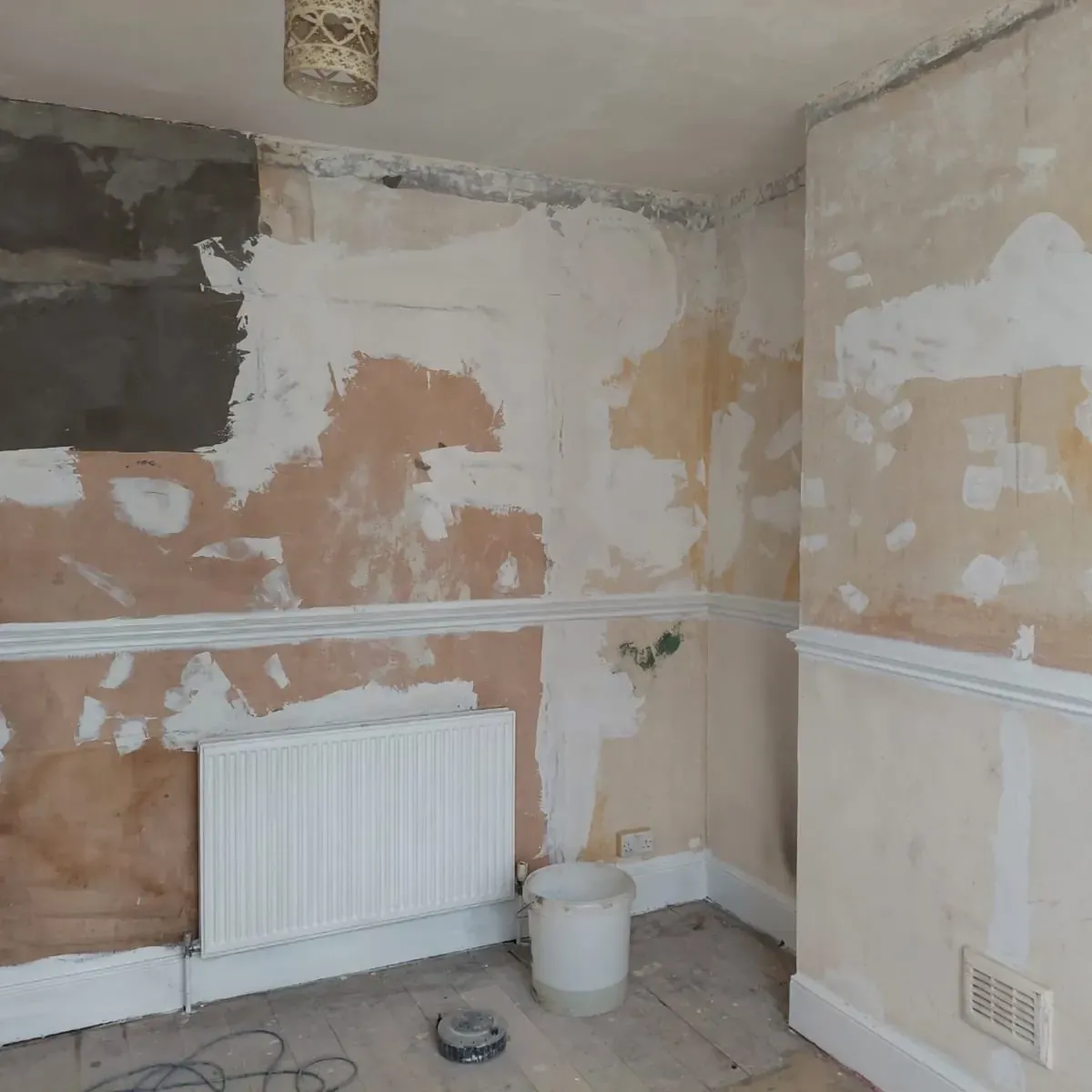
A plain-English guide to the Decent Homes Standard — the four criteria every social home must meet, what is changing, and how providers bring stock up to standard.
The Decent Homes Standard is the government’s minimum condition standard for social rented homes in England. To count as "decent", a home must meet all four of its criteria: it must be free of the most serious health and safety hazards, be in a reasonable state of repair, have reasonably modern facilities and services, and provide a reasonable degree of thermal comfort. Failing any one criterion makes the home non-decent.
For housing associations and local authorities, the standard drives stock investment programmes, regulatory reporting and reputational risk — the proportion of homes failing it is one of the figures providers must now publish. This guide, from the team at RS Construction and Property Services Ltd, a social housing contractor working across East London and London since 2010, explains what each criterion means in practice, how the standard is changing, and how providers bring homes up to standard.
What is the Decent Homes Standard?
The Decent Homes Standard is a UK government standard, first introduced in the early 2000s, that defines the minimum condition a social rented home should be in. It applies to homes let by local authorities and housing associations, and compliance is overseen by the Regulator of Social Housing. A home is "decent" when it satisfies all four criteria of the standard — failing any one of them makes the home non-decent.
What are the four criteria of the Decent Homes Standard?
- It meets the current statutory minimum standard for housing — in practice, it must be free of Category 1 hazards under the Housing Health and Safety Rating System (HHSRS), such as serious damp and mould, excess cold, or fall and fire risks.
- It is in a reasonable state of repair — key building components (roofs, windows, doors, heating, electrics, kitchens, bathrooms) must not be both old and in poor condition.
- It has reasonably modern facilities and services — broadly, a kitchen that is under 20 years old and adequately laid out, a bathroom under 30 years old and appropriately located, and adequate noise insulation and common areas.
- It provides a reasonable degree of thermal comfort — effective insulation combined with efficient heating.
The repair and modern-facilities tests work on combinations, not single factors. A home only fails the modern-facilities criterion if it lacks three or more of the listed items, and a component must usually be both old and in poor condition to fail the repair test. A 25-year-old kitchen in good, functional condition may well still pass. This is why accurate, up-to-date stock condition data matters so much — decency cannot be assessed from age alone.
How is the Decent Homes Standard changing?
The standard is in the middle of its biggest overhaul since it was introduced. The government consulted on a reformed Decent Homes Standard in 2025, with proposals including a specific requirement on damp and mould, and updated expectations around home security and safety. Alongside that, Awaab’s Law — phased in for social landlords from October 2025 — sets fixed timescales for investigating and fixing dangerous hazards such as damp and mould, and the Renters’ Rights Act extends a Decent Homes Standard to the private rented sector for the first time, with implementation dates to be confirmed. The direction of travel is clear: condition standards are tightening, they will be enforced harder, and they will cover more homes.
Why does the standard matter for housing providers?
Non-decency is now highly visible. Providers report the percentage of homes failing the Decent Homes Standard through the Regulator of Social Housing’s tenant satisfaction measures, and consumer regulation gives the regulator real teeth where stock condition is poor. Beyond regulation, non-decent homes drive disrepair claims, complaints to the Housing Ombudsman, higher reactive repair costs and lower tenant satisfaction. Investing to the standard is almost always cheaper than managing the consequences of falling below it.
How do you bring homes up to the Decent Homes Standard?
- Start with reliable stock condition surveys, so investment is targeted at genuinely non-decent homes rather than spread by assumption.
- Deliver planned component-replacement programmes — kitchens, bathrooms, heating systems, windows, doors and roofs — sequenced street by street or block by block for efficiency.
- Use void periods well: an empty property is the best opportunity to clear every decency failure in one visit, before a new tenancy begins.
- Fix root causes, not symptoms — damp and mould must be traced to the source (leaks, condensation, cold bridging, ventilation) and remediated, not decorated over.
- Keep certification in order: gas safety records, EICRs and completion documentation are the evidence that homes meet the statutory element of the standard.
In occupied homes, delivery is as much about people as construction. Works need clear tenant communication, respectful DBS-checked operatives, and sensible sequencing so residents are disturbed as little as possible — especially for kitchen and bathroom replacements, which are intrusive by nature.
Key takeaways
- The Decent Homes Standard is the minimum condition standard for social rented homes in England — failing any one of its four criteria makes a home non-decent.
- The four criteria are: free of Category 1 (HHSRS) hazards, in a reasonable state of repair, reasonably modern facilities and services, and a reasonable degree of thermal comfort.
- The standard is being reformed following a 2025 government consultation, and the Renters’ Rights Act extends a decency standard to private rented homes for the first time.
- Non-decency is publicly reported through tenant satisfaction measures and feeds disrepair claims, complaints and higher reactive repair costs.
- Reliable stock condition data, planned component programmes and well-used void periods are how providers get homes decent — and keep them decent.
Does the Decent Homes Standard apply to private landlords?
Not yet. The standard has historically applied to social rented homes only. The Renters’ Rights Act provides for a Decent Homes Standard to be applied to the private rented sector for the first time, with the detail and implementation dates to be set out in secondary legislation. Private landlords already have separate condition duties, including the Homes (Fitness for Human Habitation) Act 2018 and hazard enforcement by councils under the HHSRS.
What happens if a social home fails the standard?
The home is classed as non-decent and the provider is expected to plan and deliver the works that restore decency. Failure rates are reported to the Regulator of Social Housing through the tenant satisfaction measures, and persistently poor stock condition can attract regulatory action. Tenants can also complain to their landlord and escalate to the Housing Ombudsman, and unresolved condition problems commonly become disrepair claims.
Is damp and mould a Decent Homes failure?
It can be. Serious damp and mould can be a Category 1 hazard under the HHSRS, which fails the statutory minimum criterion of the standard. Separately, Awaab’s Law sets fixed timescales for social landlords to investigate and fix damp, mould and other dangerous hazards, phased in from October 2025 — so damp and mould now carries both a decency consequence and a hard legal deadline.
How old can a kitchen or bathroom be under the standard?
The guideline ages are 20 years for a kitchen and 30 years for a bathroom, but age alone does not fail a home. The modern-facilities criterion is only failed when a home lacks three or more of the listed items, and the repair criterion generally requires a component to be both old and in poor condition. In practice, kitchens and bathrooms past those ages are the usual triggers for planned replacement programmes.
How RS Construction supports Decent Homes programmes
RS Construction and Property Services Ltd has worked with housing providers and local authorities since 2010, delivering the works that Decent Homes compliance depends on: kitchen and bathroom replacements, heating and electrical upgrades, damp and mould remediation, void refurbishments, and planned and reactive maintenance across East London and London. We work through a directly employed, multi-trade workforce, hold CHAS, Constructionline, SafeContractor and SSIP accreditations alongside ISO 9001, 14001 and 45001, and our gas and electrical work is carried out by Gas Safe and NICEIC registered engineers. If you are planning stock investment or reviewing decency compliance, our team is happy to help.
Related
Planning a project across East London or London?
Get a free estimate